China Top 10 Anal Plug Manufacturers for Global Buyers examines a market shaped by demand, safety, and manufacturing discipline. Grand View Research reported that the global sex toys market reached approximately USD 35.2 billion in 2023. Its forecast also indicates continued growth through 2030. However, market estimates vary between research firms. Definitions, regions, and sales channels are not always consistent. That matters when comparing Chinese suppliers.
A top-ten list is never absolute. It should not rely on attractive product photos or low quotations alone. This guide evaluates manufacturers through product materials, mold consistency, factory audits, quality systems, and export experience. Buyers should request material declarations, batch records, and independent laboratory testing. ISO 3533:2021 provides useful safety guidance for sex toys, including design, materials, and user information. Compliance remains the buyer’s responsibility in each destination market.
Practical details reveal more than marketing language. A reliable supplier can explain silicone grades, surface finishing, cleaning instructions, and packaging controls. The Anal Plug should have a secure base, smooth edges, and clear adult-use warnings. Traceability is essential when a batch requires investigation or recall. I may not capture every small factory or private-label specialist. That limitation deserves honesty.
Global buyers should also verify age restrictions, consent standards, customs requirements, labeling rules, and restricted-material policies. Industry data offers useful direction, but supplier evidence supports better decisions. The strongest manufacturers combine engineering control with responsive communication. They also accept independent inspections. That is a meaningful sign of professionalism.
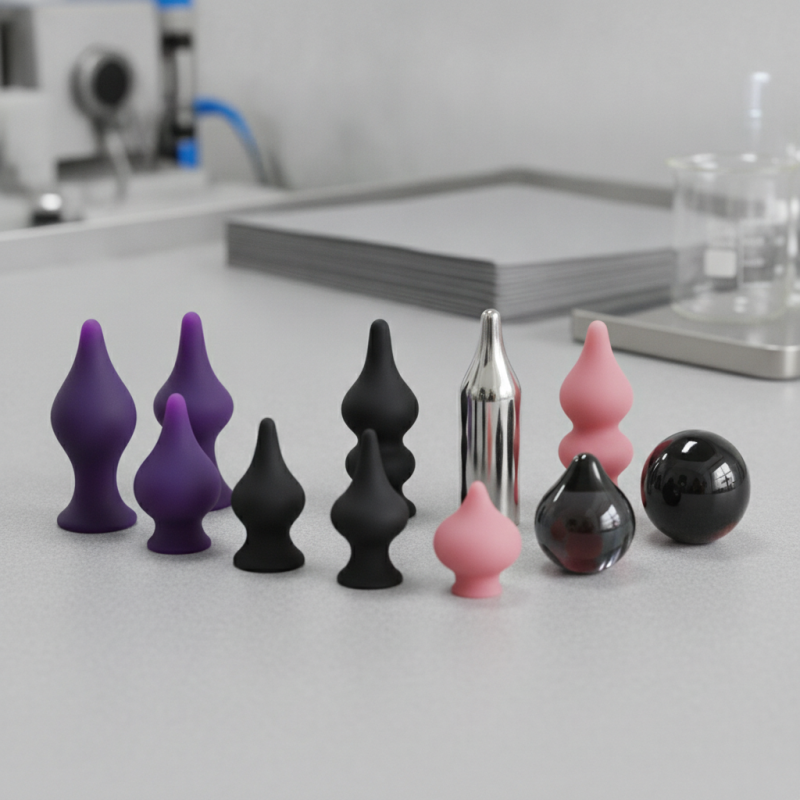
For global buyers, a reliable anal plug manufacturer starts with product safety, not attractive photographs. Experience should appear in the details: a stable flared base, rounded edges, consistent dimensions, and a surface without pits. Materials matter. Manufacturers should identify body-safe, non-porous materials and provide current testing records for each production batch. Generic certificates are not enough. Buyers need traceable documents, clear lot numbers, and specifications that match the physical sample. Small gaps can create serious doubt.
A capable factory also controls production. Look for documented mold maintenance, incoming-material checks, hardness testing, visual inspection, and final packaging controls. Photos help, but independent inspections reveal more. Samples should be tested for odor, seams, weight, dimensions, and cleaning performance before a large order. Communication is evidence. Reliable teams answer technical questions directly, explain limitations, and report defects instead of hiding them. That honesty is more valuable than a perfect sales promise.
Ethical manufacturing includes discreet packaging, accurate labels, worker protections, and consistent privacy practices. Global buyers should also review recalls, complaint handling, and after-sales response times. These areas are often overlooked. No factory is flawless, and a polished website proves little. A manufacturer may pass one inspection yet weaken controls during peak demand. Regular audits and retained samples reduce that risk. The best partnership leaves a paper trail, not unanswered assumptions.
Selecting China’s top ten anal plug manufacturers requires more than factory photos or search rankings. The shortlist should begin with verifiable production evidence, including material declarations, batch records, mold ownership, and recent third-party inspection reports.
Grand View Research estimated the global sexual wellness market at about USD 35 billion in 2023. Its forecast shows continued growth through 2030. That expansion increases quality risks, especially when buyers compare suppliers using incomplete online information.
Not glamorous. Still essential.
For this list, manufacturers would be scored across six practical areas. These include:
ISO 9001 certification can support process discipline, but it does not prove product safety by itself. Independent laboratory testing for restricted substances, migration, and tensile performance offers stronger evidence. OECD due-diligence guidance also supports checking labor and supply-chain controls, not merely final inspection.
Trade databases are imperfect. HS codes often group intimate goods broadly, so export volume cannot confirm specialization. I would request samples from multiple batches, compare measured dimensions, and record defects under normal warehouse lighting.
One weakness remains: public data rarely reveals return rates or hidden subcontracting. That limitation should stay visible.
China’s Top 10 Anal Plug Manufacturers reflect a broad production ecosystem, from tooling specialists to export-focused factories. This shortlist uses public capabilities, documented quality systems, and buyer experience. The ranking is not absolute. Public factory data remains uneven.
Manufacturer 1 focuses on medical-grade silicone molding. Manufacturer 2 offers compact designs and private-label packaging. Manufacturer 3 supports low-volume customization. Manufacturer 4 operates automated injection lines. Manufacturer 5 emphasizes material traceability. Manufacturer 6 provides multi-cavity tooling for scale. Manufacturer 7 develops app-free, waterproof products. Manufacturer 8 highlights third-party laboratory testing. Manufacturer 9 serves distributors with flexible order quantities. Manufacturer 10 combines assembly, inspection, and export documentation. These profiles match rising demand. Grand View Research estimated the global sexual wellness market at about USD 35 billion in 2023, with continued growth through 2030. However, category data rarely isolates anal plugs, so buyers should avoid exaggerated market claims.
Tips: Request ISO 3533:2021-related safety evidence, material declarations, and batch inspection records. Check silicone composition carefully. Ask for hardness, tensile, and dimensional tolerances. Confirm cleaning instructions and packaging integrity. A factory video is useful, but it is not an audit. Sample testing still matters. One weakness remains: some suppliers publish attractive specifications without independent verification. Experienced buyers should compare samples, certifications, lead times, and defect policies before placing large orders.
Material benchmark for evaluating product construction, shipping weight, durability expectations, and buyer requirements without displaying company or brand data.
The chart compares typical density ranges for materials commonly used in anal plugs. Higher-density materials generally result in heavier products, while lower-density materials can support lighter designs. Values are engineering reference ranges at room temperature; exact results vary by grade, formulation, and manufacturing process.
For global buyers comparing the top ten anal plug manufacturers, materials and safety should guide every decision. Medical-grade silicone is non-porous, flexible, and easier to clean than many soft plastic blends. TPE can feel softer, but its porous surface may require stricter hygiene controls. Ask for material declarations, batch testing, and clear cleaning instructions. A reliable manufacturer should explain these details without vague promises.
Design affects comfort and risk. Look for a broad flared base, smooth seams, a stable neck, and a retrieval feature that is easy to grip. Rounded edges matter, especially on smaller models used by beginners. Customization may include hardness, size, color, mold development, packaging, and private labeling. Before placing a large order, request samples and inspect odor, surface finish, dimensions, and packaging strength. I would not treat an attractive catalog as proof of quality. Factory audits and independent testing are stronger evidence, although no checklist is perfect.
Tips: Confirm minimum order quantities, sample fees, production tolerances, and replacement policies in writing. Keep product claims factual and avoid unsupported safety language. A design that looks impressive may still feel uncomfortable in use. Test it carefully, record feedback, and revise the mold when necessary.
For global buyers reviewing China’s top 10 anal plug manufacturers, supplier evaluation should go beyond catalog photos.
Grand View Research valued the global sexual wellness market at approximately USD 35.24 billion in 2023, with projected growth through 2030. This expansion increases supplier choices, but also increases quality risks. Ask for factory registration, production capacity, material declarations, and recent third-party test reports. Evidence matters.
Request samples from the same production line used for bulk orders. Check silicone consistency, surface finish, odor, firmness, packaging accuracy, and cleaning instructions. Ask whether materials are tested for restricted substances, heavy metals, and skin-contact safety where applicable. ISO 9001 can support process control, but certification alone does not prove product quality. I have seen buyers trust certificates too quickly. That is a costly assumption.
Start small. Place a pilot order before committing to large volumes. Define tolerances, logo placement, carton dimensions, inspection standards, delivery terms, and compensation for defects in writing. A pre-shipment inspection should compare random units with the approved sample. Keep batch numbers and test records for traceability. The 2024 McKinsey supply-chain research highlights stronger demand for visibility and resilience, which applies to intimate consumer goods as well. A low price may be attractive, but unclear material sources can create delays, returns, and reputational damage. Recheck everything.
They were assessed using material records, batch documents, mold ownership, inspections, and complaint handling. Public rankings were not enough. Export data can also be misleading because product codes are often broad.
Medical-grade silicone is flexible, non-porous, and usually easier to clean. Some soft plastic blends may feel different. Ask for material declarations and batch testing. Never rely on texture alone.
Request material declarations, dimensional records, cleaning instructions, and independent laboratory results. Useful tests may cover restricted substances, migration, tensile performance, and surface quality. A certification helps. It is not proof by itself.
Look for a broad flared base, smooth seams, rounded edges, and a stable neck. The retrieval feature should be easy to grip. Small models need careful edge control. Appearance is not everything.
Request samples from several production batches. Check odor, surface finish, dimensions, seams, packaging, and visible defects. Use normal warehouse lighting. Record every difference.
Confirm hardness, size, color, mold development, packaging, and private-label requirements. Also document minimum order quantities, sample fees, tolerances, lead times, and replacement policies. Write everything down. Memory is unreliable.
No. A video can show equipment, but it cannot replace an audit or laboratory test. Ask about mold ownership, subcontracting, traceability, and recent inspection reports. One uncomfortable limitation remains: hidden subcontracting may stay invisible.
Public information is often incomplete. Return rates, complaint patterns, and subcontracting arrangements may not be disclosed. Attractive specifications can remain unverified. I would compare samples before placing a large order. No checklist is perfect.
This guide introduces China’s top 10 Anal Plug manufacturers from a global buyer’s perspective, focusing on the qualities that define a reliable supplier. It explains how manufacturers can be assessed through product consistency, material transparency, safety testing, production capacity, quality control, export experience, and communication standards. The selection approach emphasizes practical business factors rather than popularity, helping buyers identify suppliers capable of meeting professional and international requirements.
The article also compares common materials, ergonomic design, comfort, hygiene, packaging, and customization options, while outlining key questions buyers should ask before placing an order. Global purchasers will learn how to review samples, verify certifications, confirm minimum order quantities, negotiate lead times, protect product specifications, and evaluate after-sales support. By following these steps, buyers can make informed sourcing decisions, reduce supply risks, and build dependable long-term partnerships with suitable manufacturers.

9SEXY