As global industries prepare for 2026, buyers are reassessing which Lubricant types deliver dependable performance, efficiency, and supply security. Mineral oils remain practical for many cost-sensitive applications. Synthetic lubricants offer stronger oxidation resistance, cleaner operation, and wider temperature performance. Bio-based options are gaining attention where environmental targets influence purchasing decisions.
This overview examines engine oils, hydraulic fluids, gear oils, compressor lubricants, greases, and specialty formulations. Each type serves a different mechanical demand. A hydraulic system operating outdoors may need stable viscosity during cold mornings and hot afternoons. A heavily loaded gearbox may require extreme-pressure protection and resistance to foaming. Small details matter.
Reliable procurement requires more than comparing prices. Buyers should verify viscosity grades, OEM approvals, performance standards, technical data sheets, safety documentation, and batch-level certificates. Supplier experience also matters, especially when products cross borders or enter demanding industries. Regional storage conditions can affect packaging, shelf life, and delivery reliability. In practice, a cheaper drum may create higher maintenance costs if it causes deposits, leakage, or unplanned downtime.
There is no universal winner. A premium synthetic product may be unnecessary for a lightly loaded machine. Conversely, selecting a basic formulation for severe service can be an expensive mistake. This guide uses current technical considerations, practical operating examples, and transparent selection criteria to compare leading Lubricant categories for global buyers. Some market expectations remain uncertain, so field testing and professional consultation should support every final decision.
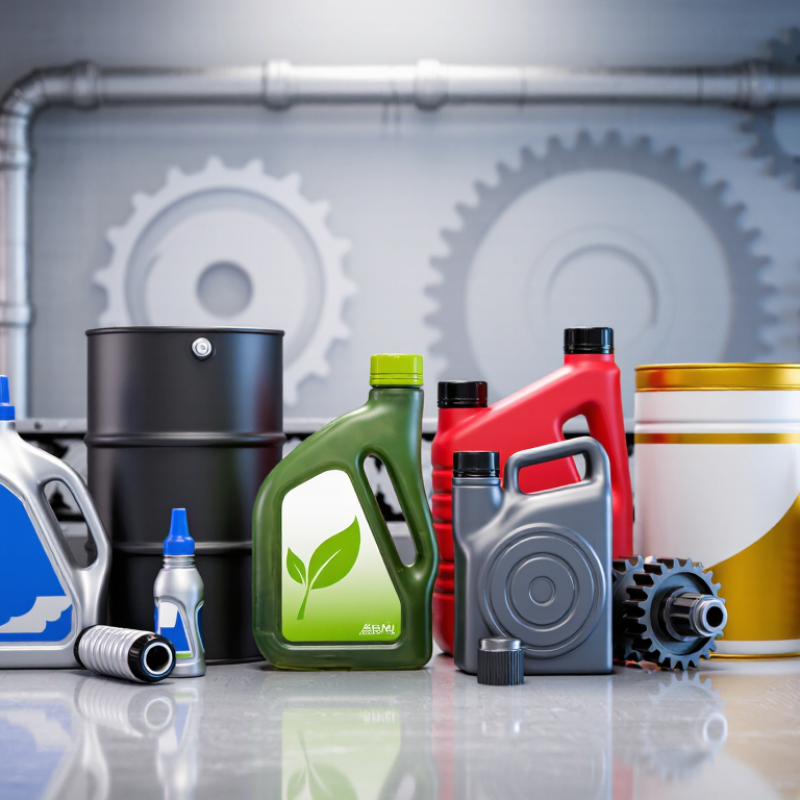
2026 Top Lubricant Types for Global Buyers?
The global lubricant market is often described as roughly 40 million metric tonnes annually. Kline’s Global Lubricants Industry analysis places demand near this level, depending on product scope and regional coverage. Lubes’n’Greases’ 2024 Global Guide also shows a market led by automotive and industrial applications.
Automotive lubricants remain a major category, covering engine oils, transmission fluids, gear oils, and coolants. Industrial lubricants include hydraulic fluids, turbine oils, compressor oils, and circulating oils. Small differences matter. A dusty quarry needs different grease from a high-speed packaging line. Temperature, load, moisture, and relubrication intervals change purchasing decisions.
Greases represent less volume than liquid oils but serve critical points such as bearings, chassis joints, and electric motors. Metalworking fluids support cutting, forming, and grinding operations, while process oils serve rubber, plastics, textiles, and manufacturing systems. Marine, aviation, and specialty fluids add smaller but technically demanding segments.
Data is not perfectly comparable. Some reports include process oils, while others exclude them. That gap can distort regional comparisons. Buyers should check viscosity grades, base-fluid types, additive performance, and local operating conditions before comparing prices. The cheapest drum may create higher downtime. Sometimes, the category label hides the real risk.
Mineral, synthetic, and bio-based oils now serve different operating realities. Mineral oils remain cost-efficient for moderate temperatures and routine machinery. However, oxidation rises quickly near 120°C, especially with moisture and air exposure. Synthetic oils usually maintain viscosity across wider temperature ranges. STLE technical reviews published in 2024 report that modern synthetic formulations can provide two to four times longer oxidation resistance than comparable mineral formulations. The exact result depends on additives, load, and test method.
Synthetic performance is not automatically superior. Some ester-based fluids absorb moisture and may affect seals. Buyers should check ASTM D445 viscosity, ASTM D2272 oxidation stability, and low-temperature data before approval. The U.S. Department of Energy’s 2024 lubricant research summaries link lower-viscosity formulations with measurable friction and fuel-use reductions in suitable engines. Field savings vary. Laboratory numbers can look better than real machinery.
Bio-based oils offer a different advantage. Selected natural ester formulations can exceed 60% ready biodegradation under OECD 301 testing, according to environmental assessment data used by European regulators. They also provide strong lubricity and high flash points. Yet cold-flow behavior, hydrolytic stability, and supply consistency require careful review.
I would not treat biodegradability as proof of total sustainability. Crop origin, processing energy, service life, and disposal still matter. The best 2026 purchase decision may be less about choosing one oil, and more about matching verified test data to temperature, load, seal material, and maintenance intervals.
For global fleet buyers in 2026, engine oil selection is becoming more technical. API SQ and ILSAC GF-7 address newer gasoline engines, tighter emissions systems, and demanding service conditions. They support cleaner operation, wear control, and improved protection against low-speed pre-ignition. That matters for delivery vans, taxis, and mixed passenger fleets.
A purchasing team should check the exact viscosity grade before ordering. A 0W-20 oil may suit some modern engines, while another vehicle may require 5W-30. The owner’s manual remains decisive. Certification details also deserve careful review. A container can mention performance benefits without meeting the required specification. Ask for current technical data, test information, and traceable supply documents.
In daily fleet work, oil performance is only one part of reliability. Short routes, cold starts, heavy idling, and dusty loading areas can shorten service intervals. Maintenance records should connect oil changes with mileage, engine hours, fuel use, and filter condition. Small details matter.
Not every fleet gains the same fuel economy improvement. That assumption needs testing. A controlled comparison across similar vehicles can reveal the real result. I have seen maintenance plans fail because buyers chose a cheaper bulk oil without checking compatibility. API SQ and GF-7 can guide a sound purchase, but proper storage, accurate filling, and disciplined inspections still decide what happens under the hood.
2026 Top Lubricant Types for Global Buyers?
Electric vehicles are changing lubricant demand faster than many purchasing plans suggest. The International Energy Agency reported more than 17 million electric cars sold worldwide in 2024. Electric vehicles accounted for over one-fifth of new-car sales. That volume makes e-transmission fluids a serious procurement category, not a niche product.
E-transmission fluids must reduce gear friction while protecting bearings, seals, and copper components. They also need stable viscosity across cold starts and high-load operation. The United States Department of Energy highlights efficiency and thermal control as central EV engineering priorities. In practice, one fluid may serve several duties inside a compact drive unit. That sounds efficient. It is also demanding.
Thermal oils are gaining attention because batteries, inverters, and motors generate different heat patterns. The IEA Global EV Outlook 2025 links faster EV adoption with growing charging and powertrain requirements. Buyers should request data on dielectric strength, oxidation stability, electrical conductivity, and material compatibility. ASTM test methods can support comparison, but laboratory results may not predict every fleet condition. This is where purchasing teams can be too confident. A fluid that performs well on a bench may behave differently after repeated fast charging, winter exposure, or contaminated service. Supplier documentation, field trials, and traceable test reports matter more than a broad “EV-ready” claim.
A practical comparison of key fluid categories used in battery-electric and hybrid-electric vehicles. Values are indicative industry ranges and vary by formulation, hardware design, and OEM specification.
| Fluid category | Primary EV application | Main performance requirements | Typical formulation direction | Indicative viscosity or operating range | Key compatibility considerations | 2026 buyer priority |
|---|---|---|---|---|---|---|
| E-Transmission and reduction-gear fluids | Single-speed or multi-speed electric drive units, reduction gears, bearings, and shafts | Low churning losses, gear and bearing wear protection, oxidation resistance, low-temperature flow, foam control, and copper protection | Low-viscosity synthetic base oils with carefully balanced anti-wear, friction-control, antioxidant, and corrosion-inhibitor packages | Commonly around ISO VG 32–68; bulk-fluid operating temperatures may range approximately from −40°C to 150°C depending on design | Electrical conductivity, stray-current behavior, elastomers, seal materials, insulation varnishes, and high-speed bearing surfaces | Very high |
| Direct-contact thermal oils | Immersion or direct cooling of battery cells, modules, power electronics, and selected e-drive components | High heat-transfer capability, electrical insulation, low volatility, oxidation stability, and resistance to swelling or cracking of materials | Highly refined or synthetic low-viscosity fluids designed for dielectric service; additive levels must be controlled to preserve insulation performance | Often below approximately 10 cSt at 40°C; operating temperatures commonly depend on battery thermal limits and may approach 60–90°C | Dielectric strength, volume resistivity, water content, cell materials, plastics, adhesives, coatings, and long-term fluid cleanliness | Very high |
| Indirect battery and power-electronics coolants | Liquid cooling plates, battery jackets, inverters, converters, motors, and integrated thermal loops | Heat capacity, freeze protection, corrosion control, pumpability, low foaming, and stable performance over extended service intervals | Water-glycol mixtures with inhibitor packages; propylene-glycol and ethylene-glycol systems are selected according to toxicity, temperature, and system requirements | Common premix concentrations are approximately 30–50% glycol by volume; freeze protection and viscosity increase with glycol concentration | Aluminum, copper, solder, seals, hoses, pump materials, electrical isolation, water quality, and contamination control | High |
| Electric-motor bearing greases | Traction-motor bearings, auxiliary electric motors, and selected high-speed rotating assemblies | High-speed stability, low torque, electrical erosion resistance, noise control, long relubrication life, and mechanical stability | Synthetic base oils with lithium-complex, polyurea, or other fit-for-purpose thickeners and additives selected for high-speed electric motors | Typically NLGI Grade 1–2; actual speed capability is application-specific and should be verified using DN or manufacturer test data | Bearing steel, electrical current passage, seals, winding insulation, grease compatibility, and acoustic performance | High |
| CV-joint and constant-velocity joint greases | Half-shafts and drivetrain joints exposed to high torque, articulation, and shock loading | Extreme-pressure protection, wear control, water resistance, low-temperature flexibility, and resistance to centrifugal separation | High-performance grease with extreme-pressure and anti-wear chemistry matched to joint metallurgy and boot materials | Usually NLGI Grade 1–2; temperature capability is commonly specified across approximately −40°C to 150°C, subject to product design | Joint steel, protective boots, clamps, seals, water ingress, shock loads, and compatibility with factory-fill grease | Medium-high |
| Brake-system fluids | Hydraulic braking systems, including vehicles with regenerative braking and friction-brake blending | High boiling point, low-temperature viscosity control, corrosion protection, water tolerance, and reliable seal performance | Glycol-ether-based or other specified hydraulic-fluid systems selected to meet the vehicle's required brake-fluid standard | Performance is governed by dry and wet boiling points and low-temperature viscosity rather than ISO VG classification | Brake seals, hoses, paint and coatings, water absorption, fluid mixing, and compliance with the specified regulatory or technical standard | Medium |
| Refrigeration and heat-pump compressor oils | Cabin HVAC, battery chillers, heat pumps, and integrated thermal-management compressors | Lubricity under refrigerant dilution, chemical stability, low-temperature miscibility, insulation compatibility, and compressor wear protection | Polyol ester or other refrigerant-compatible synthetic oils selected according to refrigerant type and compressor architecture | Common viscosity grades are approximately ISO VG 32–68, but the correct grade depends on compressor design and refrigerant compatibility | Refrigerant chemistry, moisture sensitivity, motor-winding insulation, seals, additives, and mixed-fluid stability | High |
| Assembly, protection, and service lubricants | Splines, hinges, fasteners, seals, connectors, sliding points, and maintenance operations | Friction reduction, corrosion prevention, low-temperature operation, cleanliness, and compatibility with plastics and elastomers | Specialty greases, dry-film lubricants, anti-corrosion fluids, and assembly pastes selected for each contact pair | No single standard range; application-specific consistency, film thickness, and temperature limits are normally used | Plastic and rubber compatibility, electrical-contact resistance, contamination, wash-off, and service procedure control | Medium |
Reference context: The International Energy Agency reported approximately 17 million electric-car sales worldwide in 2024. Indicative viscosity and temperature figures above are general industry ranges, not universal specifications; final selection must follow the applicable vehicle, component, safety, and regulatory requirements.
Global buyers are comparing more than viscosity today. Food-processing lines demand documented compatibility, cleanability, and controlled incidental-contact risk. ISO 6743 helps classify lubricants by application and family, supporting a consistent technical conversation. However, ISO 6743 is not a food-safety approval.
NSF H1 covers lubricants that may accidentally contact food during processing. Registration does not mean the lubricant is edible. It also does not replace hazard analysis or sanitation controls.
Buyers should verify the exact formulation, application, temperature range, and registration record. Small details matter. An H1 lubricant used beyond its rated conditions can still create maintenance and contamination concerns.
Grand View Research estimated the global lubricants market at about USD 162.5 billion in 2023, with continued growth forecast through 2030.
In a practical purchase review, inspect a conveyor bearing near a washdown zone. Check water resistance, relubrication intervals, and residue behavior.
At a 180°C oven zone, oxidation stability becomes critical. Near a filling nozzle, H1 status and dosage control matter more.
ISO coding can narrow the choice, but operating evidence must decide it. Market forecasts are useful, yet imperfect.
Some reports blur industrial and food-grade demand, so buyers should question broad growth figures before planning inventory.
They support cleaner operation, wear control, and protection against low-speed pre-ignition. This benefits taxis, delivery vans, and passenger vehicles.
Check each vehicle’s owner’s manual before ordering. One engine may require 0W-20, while another needs 5W-30. Guessing is risky.
Request current technical data, test information, certification details, and traceable supply documents. Marketing claims alone are not enough.
No. Results vary with vehicle type, routes, traffic, and maintenance. Compare similar vehicles under controlled conditions. The assumption may fail.
Short routes, cold starts, heavy idling, and dusty loading areas can increase oil stress. A busy van can show these effects quickly.
Record mileage, engine hours, fuel use, filter condition, and replacement dates. These details reveal patterns hidden by mileage alone.
It classifies lubricants by application and product family. It creates a shared technical language. It is not food-safety approval.
It covers lubricants that may accidentally contact food during processing. The lubricant is not edible. Sanitation controls still matter.
Check the exact formulation, temperature range, dosage, application, and registration record. Near a filling nozzle, control residue carefully.
For conveyor bearings, inspect water resistance and relubrication intervals. At 180°C, evaluate oxidation stability. Evidence should outweigh assumptions.
The 2026 lubricant market is shaped by diverse applications, with global demand approaching 40 million metric tons annually. Mineral oils remain valued for affordability and broad availability, while synthetic oils offer stronger thermal stability, longer service intervals, and improved efficiency. Bio-based alternatives are gaining attention where renewable sourcing and environmental performance are priorities. Buyers should compare viscosity, oxidation resistance, operating temperature, equipment compatibility, and lifecycle costs before selecting a Lubricant.
For modern vehicle fleets, engine oils aligned with API SQ and ILSAC GF-7 requirements are designed to support fuel efficiency, emissions control, and advanced engine protection. The rapid growth of electric vehicles, following approximately 17 million sales in 2024, is increasing demand for specialized e-transmission and thermal fluids. Industrial users should organize selections according to ISO 6743 categories, while food-processing environments require NSF H1 lubricants suitable for incidental contact applications. A practical purchasing strategy matches performance data and compliance needs to each operating environment.

9SEXY